
The History of Chadō and Sen no Rikyū
The Four Principles of Chadō — Wa, Kei, Sei, Jaku
Every tea gathering rests on four principles:
- Wa (和) — Harmony: attunement between host, guest, the tools, and the season around them.
- Kei (敬) — Respect: a sincere regard for others and for every object involved, however humble.
- Sei (清) — Purity: cleanliness of the space and of the mind, the setting aside of clutter within and without.
- Jaku (寂) — Tranquility: the stillness that arrives naturally once harmony, respect, and purity are practiced.
Ichi-go Ichi-e — One Time, One Meeting
The Traditional Tea Ceremony vs. a Tea Ritual at Home
How to Bring Chadō into Your Home
At Ode Ritual, we offer a simplified, modern way to practice at home — one that stays true to the spirit while fitting into everyday life. With a few essential tools and a few unhurried minutes, anyone can enter the meditative rhythm of preparing and drinking tea.
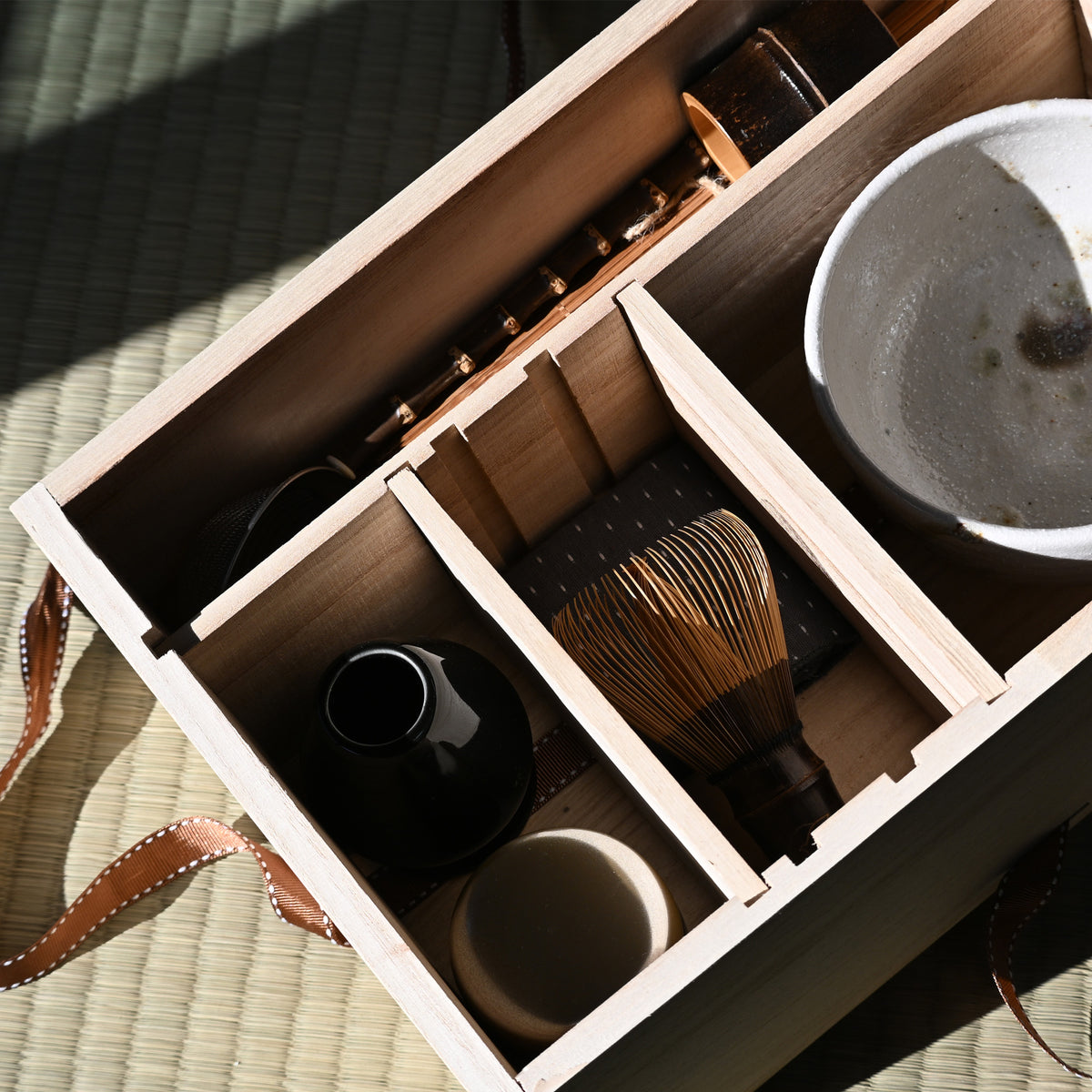
To begin, explore our step-by-step guides. At Ode Ritual, we also offer curated sets with everything you need to begin your ritual – check out our Matcha Ritual Starter Set, or Matcha Latte Ritual Full Set, or Sencha Ritual Set – curated at our own studio in Kyoto.


Frequently Asked Questions
What is the difference between Chadō and Sadō?
Both are readings of the same characters, 茶道, and both mean "the Way of Tea." Chadō is the reading favored in the major tea lineages such as Urasenke, while sadō is also widely used; they refer to the same practice.
Is matcha always used in Chadō?
The formal ceremony centers on whisked matcha, but the broader spirit of tea ritual extends to sencha and other Japanese teas prepared with the same care.
Can you practice Chadō at home as a beginner?
Yes. While mastery of the formal ceremony takes years, the everyday practice — preparing tea slowly, attentively, in a calm space — is accessible by anyone with a few basic tools and the willingness to slow down.