

A step-by-step guide to preparing and enjoying hojicha latte—a modern tea ritual for moments of calm.
This ritual offers a contemporary interpretation of Japanese tea ritual (Chadō) using roasted hōjicha, while drawing on the spirit of Chadō. With its deep aroma and mellow warmth, this practice invites you to slow down, engage the senses, and reconnect with yourself through a simple act of preparation.
Hojicha Latte Ratio & Quick Reference
Hojicha powder: 3-4g (approx. 4-5 heaping chashaku scoops)
Water Volume: 30–40 ml (approx. 1–1.5 oz)
Milk Volume: 100–120 ml (approx. 3.5–4 oz)
Water Temperature: 75°C–80°C (167°F–175°F)
Tools & Ingredients for Hojicha Latte Ritual
Main Teaware
- Katakuchi Chawan (matcha bowl with a spout)
- Natsume (tea caddy)
- Chasen (bamboo whisk)
- Chashaku (tea scoop)
- Chafurui (tea sieve)
- Chakin (tea cloth)
For a complete setup, explore Ode Ritual's Matcha Latte Ritual Full Set – a 10-piece suite of artisanal matcha tools housed in a custom paulownia wood box.
Hojicha & Milk
Finely milled roasted hojicha powder (not loose leaf). Try our Premium Hojicha – For the Nostalgic.
Milk (dairy or plant-based)—heated (not boiled) for hot latte, or cold for iced latte.
Optional Teaware & Ingredients
- Latte cup
-
Sweetener (e.g., honey, maple syrup, kuromitsu)
- Ice cubes, for iced latte
- Yuzamashi (water cooling vessel, e.g., Yuzamashi – Deep Charcoal)
- Kensui (waste water bowl) or an extra bowl
Step-by-Step Hojicha Latte Preparation Guide
Step 1: Prepare your space and mind
Choose a clean, quiet space with natural light and minimal distractions. Sit comfortably and take a moment to settle your breath and bring your focus to the ritual ahead.
Lay out your tools with care. If using our Matcha Latte Ritual Full Set, begin by opening the paulownia wood box and rolling out the bamboo mat—evoking the feeling of tatami in a traditional tea room. Place each tool thoughtfully on the mat.
Step 2: Warm the bowl and whisk

Boil fresh water, then pour about 250–300 ml into your Yuzamashi (if using). Let it cool slightly—to around 80°C (175°F)—the ideal temperature to highlight umami and avoid bitterness.
Pour about half of the warm water into the Chawan (matcha bowl). Swirl gently to warm the bowl, then dip the Chasen a few times to soften its tines.
Discard the water into a Kensui or separate bowl, and wipe the bowl dry with the Chakin (tea cloth).
Step 3: Add hojicha powder and hot water

Using the Chashaku, scoop about 4-5 heaping scoops (approx. 3-4g) of hojicha powder. Using the Chafurui (tea sieve), sift the hojicha powder into your bowl to prevent clumping.
Gently pour in around 30-40 ml of the prepared water.
Step 4: Whisk with intention

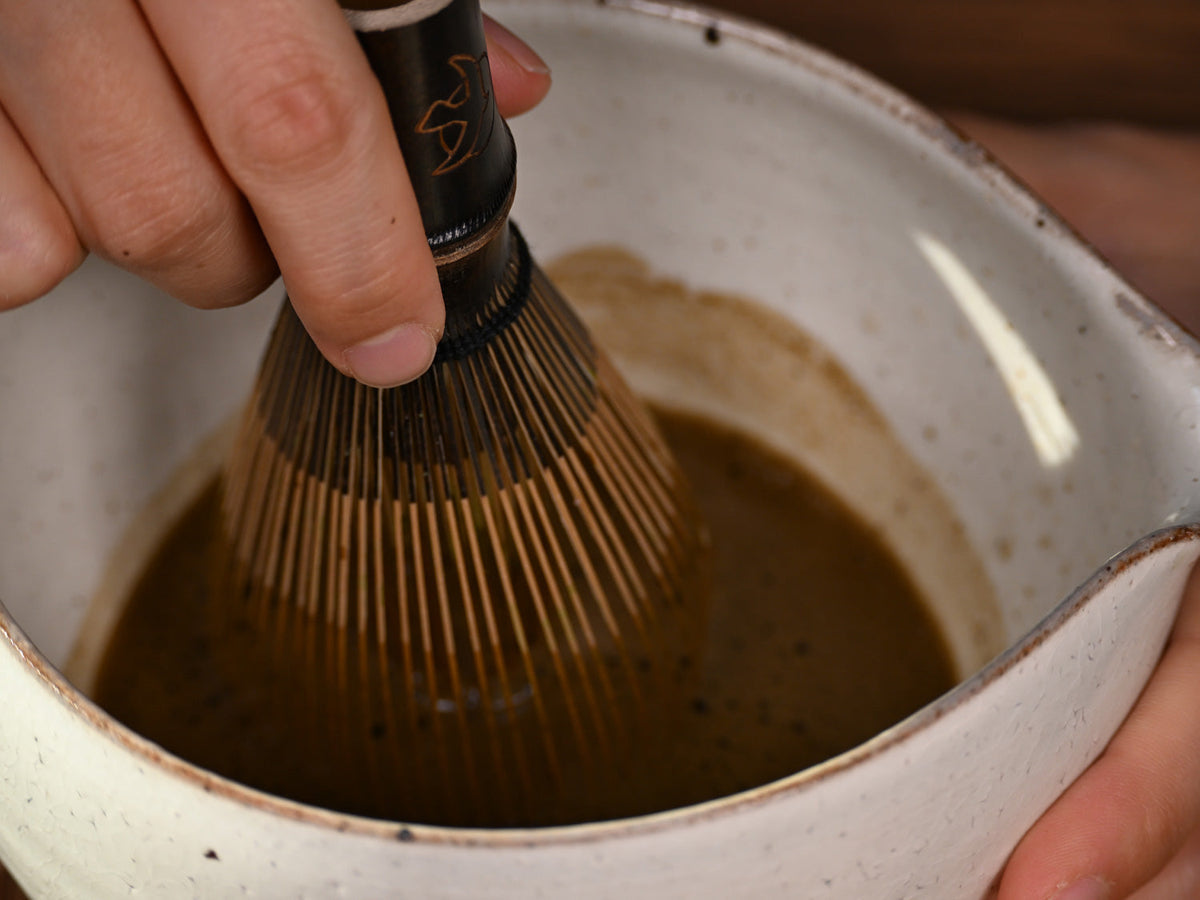
Hold the Chasen upright and whisk briskly in a light, vertical motion from the wrist. Release tension and allow the movement to become rhythmic—focused, yet relaxed.
Whisk around 20-30 times, until a fine layer of froth forms. Then slow your movement and shift into a gentle zigzag pattern to blend the matcha evenly.
To finish, trace a small “O” shape and end at the center of the bowl.
Step 5: Pour the milk

Pour around 100-120ml (approx. 3.5–4 oz) of the prepared milk gently into your latte cup. For iced latte, add ice cubes.
Step 6: Combine and enjoy

Pour the whisked hojicha gently into your chawan, watching the colors bloom and swirl.
Sit back. Breathe in the aroma. Sip slowly. Let the flavor bring you into the present.
Step 7: Clean your tools
Rinse the chasen in warm water. Gently wipe your bowl and tea scoop.
Return your tools to their place with care. The ritual ends, but its quiet presence stays with you.
Each preparation is a small ceremony. A chance to begin again.
A moment that exists only once: ichi-go ichi-e (一期一会).
Frequently Asked Questions About Hojicha Lattes
What does a Hojicha latte taste like?
Hojicha is roasted green tea, giving it a warm, nutty, and slightly smoky flavor with natural caramel undertones. Unlike green matcha, which has earthy umami notes, a hōjicha latte tastes sweet, cozy, and comforting without bitter astringency.
Which milk pairs best with a matcha latte?
Oat milk and whole dairy milk are the most popular choices because their creamy textures complement the natural umami profile of Uji matcha. For a lighter, nuttier flavor, almond milk is also an excellent option.
Is there caffeine in Hōjicha latte?
Because Hojicha is roasted at high temperatures, most of the caffeine content is naturally stripped away. Moreover, Ode Ritual's Hojicha powder uses the stem of green tea leaves which has even less caffeine than the leaves. The very low caffeine level makes Hojicha latte an ideal late-afternoon or evening drink.
Can I use loose-leaf hojicha tea for a latte?
While you can steep loose-leaf hōjicha in hot milk, using finely milled Hojicha powder creates a creamy, cafe-style latte. The powder dissolves directly into water and milk, delivering maximum flavor depth and a velvety froth.
Looking for vibrant green matcha tea rituals instead? Check out our complete guide to matcha latte ritual and preparation or the complete guide to Usucha matcha ritual and preparation.


